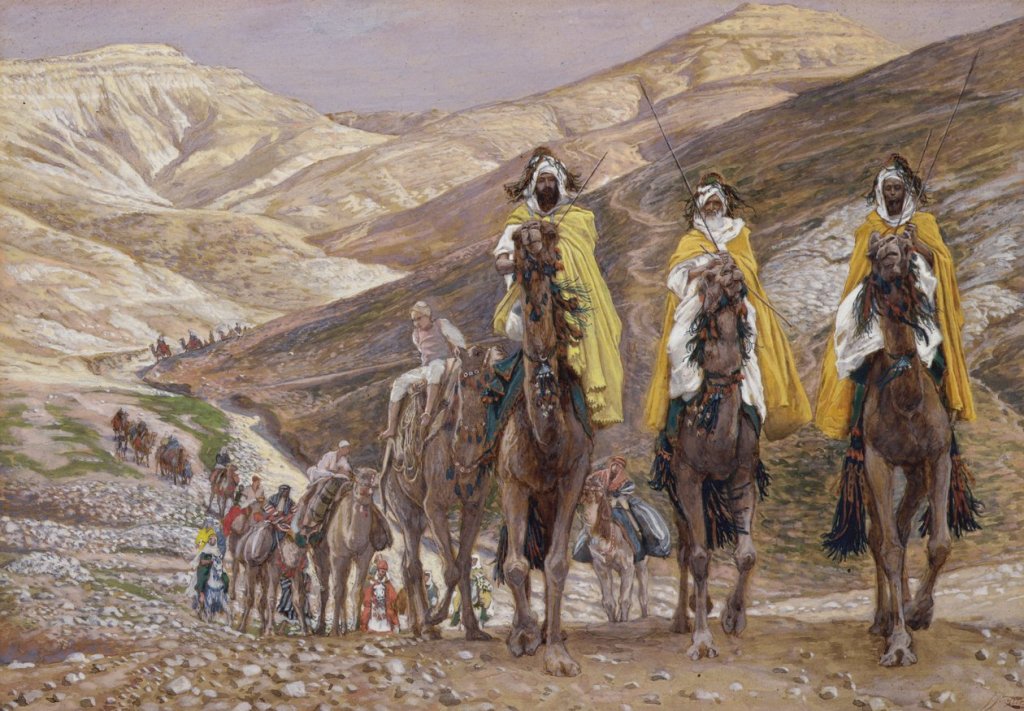
The Magi’s Journey: What True Worship Really Costs

by Marc Ulrich

The story of the Magi visiting Jesus is one of the most misunderstood narratives in Scripture. While our Christmas traditions paint a picture of three kings arriving at a manger on Christmas night, the biblical account tells a very different story – one that challenges how we think about worship, sacrifice, and what it truly means to seek Jesus.
Who Were the Magi Really?

Bursting the Christmas Bubble

Let’s start by clearing up some misconceptions. The Magi weren’t at Jesus’ birth on Christmas Eve – they arrived when Jesus was a child, likely 1-2 years old. There weren’t necessarily three of them (that idea comes from a 19th-century song), and they weren’t kings. The text simply mentions three gifts, not three people.
Understanding the Magi’s Identity

The word “Magi” comes from the Greek “magoi,” referring to leading religious and political figures who specialized in astrology, dream interpretation, and advising rulers. Think of them as a combination of scientists, diplomats, and religious advisors. They were the kind of people kings relied on for wisdom about the present and future.
These weren’t just three travelers with camels – this was likely a caravan of 50-70 people, complete with armed guards to protect their valuable gifts. When they arrived in Jerusalem, asking about the “one born king of the Jews,” they caused quite a stir.


Why Did Their Arrival Upset Jerusalem?

Political Tensions

The Magi likely came from the Parthian Empire, Rome’s greatest rival to the east. Herod the Great had spent years fighting off Parthian influence and establishing his authority as “King of the Jews” – a title granted by Rome, not by birth. When a caravan from the east arrived asking about someone who was “born” king of the Jews, it threatened everything Herod had worked to establish.
Theological Implications

From a biblical perspective, movement “from the east” often represents moving away from God (think Adam and Eve leaving Eden, or Israel’s exile to Babylon). The Magi’s journey from east to west represented an act of repentance – people returning to God. This would have been particularly unsettling to religious leaders who believed outsiders had no place in God’s plan.
How Did They Know to Look for the Star?

Daniel’s Influence

The answer likely traces back to Daniel during the Babylonian exile. When Daniel interpreted King Nebuchadnezzar’s dream, he was placed “in charge of all the wise men” (Daniel 2:48). Daniel likely taught these Magi about the coming Messiah and the prophecy in Numbers 24:17 about a star rising out of Jacob.
Generational Faithfulness

For hundreds of years, these teachings were passed down through generations of Magi. They were paying attention, watching the skies, waiting for the promised sign. When they saw the star, they didn’t miss it because they had been intentionally looking.
What Made Their Gifts So Special?

The Cost of Gold

All gold in the ancient world came from specific mines in Nubia, south of Egypt. These weren’t just mines – they were considered temples to the gods. The gold had to be extracted by hand, making it incredibly precious and rare.
The Journey’s Sacrifice

The Magi traveled 1,500+ miles at the pace of walking camels – a journey taking 1-2 years. They planned extensively, gathered resources, arranged protection, and committed to this act of worship long before they ever saw Jesus. Their worship cost them something significant.
What Does True Worship Look Like Today?

Attention and Intentionality

The Magi’s example challenges us to examine our own worship. Are we paying attention to what God is doing around us? Are we giving our worship the intentionality it deserves, or are we just going through the motions?
True worship isn’t about showing up on Sunday and singing songs. It’s about a lifestyle of 167 hours outside the church building that demonstrates our devotion to Jesus.
Worship That Costs Something

The Magi’s worship required sacrifice – time, resources, energy, and risk. They had to protect their gifts and guard their mission. What does our worship cost us? If it doesn’t require any sacrifice or intentionality, is it really worship?
Worship That Challenges Authorities

Their worship disrupted the status quo and challenged earthly powers. Does our worship of Jesus challenge the authorities and values of our age, or are people comfortable with our faith because it never inconveniences anyone?
Bringing Peace Through Worship

Peacemaking Requires Action

Jesus said, “Blessed are the peacemakers” – not those who find peaceful situations to join. Peacemaking means stepping into conflict and working for wholeness. True worship brings the peace of Jesus to broken situations and marginalized people.
Practical Peacemaking

This might mean addressing our own addictions and destructive habits. It could involve being generous with our resources to meet needs around us. It might require standing up for immigrants and marginalized people, seeing them as beloved image-bearers of God rather than threats or burdens.
Life Application

The Magi’s journey challenges us to worship Jesus with the same attention, intentionality, and sacrifice they demonstrated. This Advent season, consider what your worship is actually costing you. Are you paying attention to what God is doing around you, or are you sleepwalking through your faith?
Your worship might involve breaking free from an addiction that’s controlling your life. It could mean establishing healthy routines and disciplines. Perhaps it’s being more generous with your time and resources to help those in need. Maybe it’s stepping into conflict situations to bring peace and reconciliation.
True worship requires us to guard and protect our spiritual gifts, just as the Magi protected their physical ones. It means living a life set apart from the world’s values and priorities.
Questions for Reflection:

Does your worship of Jesus challenge the authorities and values of this age, or are people comfortable with your faith because it costs you nothing?
What would it look like to worship Jesus with the same intentionality and sacrifice as the Magi who traveled for years to bring their gifts?
Where is God calling you to be a peacemaker this season – to step into conflict and work for wholeness rather than avoiding difficult situations?
If someone examined your calendar, spending habits, and photo gallery, what would they conclude you’re truly worshiping?

Embracing the Call: Lessons from Acts 6-8

Introduction

In our journey through the Book of Acts, we find ourselves immersed in chapters 6 through 8, a passage rich with lessons on leadership, cultural tension, and the transformative power of the Holy Spirit. As we delve into these chapters, we uncover timeless truths that challenge us to live out our faith in a multicultural world, embrace our God-given callings, and cultivate a heart ready for revival.

Cultural Tensions and Leadership in the Early Church

The early church faced significant cultural tensions between the Hebraic and Hellenistic Jews. This division arose from differing responses to the Hellenistic influence, which brought both advancements and challenges to Jewish traditions. The apostles, recognizing the need to address these tensions, chose seven men full of the Holy Spirit and wisdom to oversee the distribution of food to the widows. Notably, these men bore Greek names, indicating a deliberate choice to empower the Hellenistic Jews.

This decision by the apostles teaches us the importance of embracing diversity within the church. It challenges us to consider how we can relinquish authority and empower those from minority groups, fostering unity and inclusivity in our communities.

Understanding Our Identity, Calling, and Assignment

A key takeaway from this passage is the distinction between identity, calling, and assignment. Our identity as beloved children of God remains constant, regardless of our roles or achievements. Our calling is the unique problem we feel compelled to address in the world, while our assignment is the specific way we fulfill that calling.

The apostles understood their primary calling was to preach the Word of God, and they wisely delegated other responsibilities to ensure they remained focused. This model encourages us to discern our own callings and assignments, ensuring we prioritize what God has uniquely equipped us to do.

The Cycle of Revival and Persecution

Acts 6-8 reveals a pattern of revival and persecution. As the disciples lived out the ethics of the kingdom, miraculous events unfolded, leading to both conversions and opposition. Stephen, one of the seven chosen, exemplified this as he performed wonders and boldly proclaimed the truth, even in the face of persecution.

This cycle challenges us to examine our own lives. Are we willing to endure discomfort and sacrifice our rights for the sake of revival? Are we prepared to stand firm in our faith, even when it leads to opposition?

The Power of Obedience and Humility

Stephen’s story also highlights the power of obedience and humility. Despite facing false accusations and eventual martyrdom, Stephen remained steadfast, filled with the Holy Spirit. His vision of Jesus standing at the right hand of God serves as a powerful reminder that our faithfulness does not go unnoticed.

Moreover, the transformation of Saul (later Paul) underscores the impact of witnessing faithful obedience. Stephen’s martyrdom became a pivotal moment in Saul’s journey, eventually leading to his conversion and significant contributions to the spread of the Gospel.

Conclusion

As we reflect on Acts 6-8, we are reminded of the importance of embracing diversity, understanding our unique callings, and living out our faith with courage and humility. Let us tend to the condition of our spiritual soil, ensuring it is receptive to the Gospel, and be intentional in our relationships, knowing that our lives are interconnected with those around us.

May we, like Stephen, be full of the Holy Spirit and wisdom, living in such a way that Jesus stands to cheer us on. As we pursue our callings and assignments, may revival break out in our generation, transforming lives and communities for the glory of God.

Living Out the Kingdom: Signs, Wonders, and the Call to Action

The story in Acts 5 may seem distant, but it reveals powerful truths about God’s kingdom and our roles within it.

Understanding the Context

The apostles were performing signs and wonders, gathering at Solomon’s Porch, and drawing people to Jesus’ teachings. This wasn’t just about miraculous healings; it was about living out the ethics of the kingdom of God. The apostles were not merely performing miracles; they were embodying a new way of life, one that stood in stark contrast to the Roman Empire’s values.

The Role of the Apostles

The term “apostle” in the New Testament isn’t just a religious title; it carries a political connotation. In the Roman Empire, an apostle was someone sent to make a new territory more Roman. Similarly, the apostles of Jesus were sent to make the world reflect the ethics of God’s kingdom. Their lives were characterized by teaching and practicing forgiveness, going the extra mile, and turning the other cheek.

Signs and Wonders: More Than Miracles

When we read about signs and wonders, it’s easy to think of them as miraculous events beyond our reach. However, these signs and wonders are fundamentally about living according to the kingdom’s ethics in every action. Treating others with love, justice, and mercy demonstrates the true miracle of the kingdom—a life shaped by ethical values that bring hope and transformation.

The Call to Action

The sermon challenges us to take specific action. Are we living out the justice and righteousness of God’s kingdom in our daily lives? How can you bring calm to the storms around you today? Who needs you to offer water or shelter right now? Decide on one concrete way you can serve others this week—then do it.

Living the Kingdom Today

In our communities, we encounter injustice, oppression, and need. Addressing these issues is not just about programs or organizations; it is about each of us living out the kingdom’s ethics. We are called to bring the values of heaven into our daily lives, to be the hands and feet of Jesus in a world longing for justice, mercy, and hope.

Conclusion

As we go about our lives, let’s remember that we are not just volunteers or participants in a religious tradition; we are also part of a larger community. We are each called to be active agents of God’s kingdom, bringing signs and wonders into the world through our actions and decisions. Let’s embrace this calling and make the world around us look a little more like heaven.

Identify one practical step you will take this week to live out the kingdom in your context. Share it with someone and follow through on your commitment. 

Discovering True Unity: Embracing the Mission of the Church

Ever Wonder What Truly Unites Us?

In a world filled with diverse opinions and backgrounds, have you ever wondered what truly unites us as a community of believers? The early church, as depicted in the book of Acts, offers a profound example of unity that transcends differences. This unity wasn’t about uniformity but a shared mission that superseded personal opinions and preferences. Let’s explore how the early disciples embraced this mission and what it means for us today.

The Power of Unity in Diversity

The apostles taught in Solomon’s Colonnade, a significant part of the Temple Mount. This wasn’t just a random location; it was a place where diverse groups gathered, much like our modern-day churches. The early disciples were a varied bunch—zealots, tax collectors, and even partiers. Yet, they were united by a mission greater than their individual differences: proclaiming the resurrection of Jesus and the kingdom of God.

This unity wasn’t about everyone looking or acting the same. It was about focusing on the church’s mission, which is to spread the message of Jesus from Jerusalem to the ends of the earth. The early church shared everything they had, so they experienced great power and grace. Imagine if our churches today were described as places where the resurrection of Jesus was proclaimed with grace upon us. How transformative would that be?

Living Generously and Authentically

The story of Joseph, a Levite from Cyprus, illustrates the power of living generously and authentically. Joseph sold a field he owned and laid the proceeds at the apostles’ feet. This act of obedience and generosity was not about seeking recognition but about supporting the church’s mission. In contrast, Ananias and Sapphira held back part of their proceeds while pretending to give it all. Their story is a cautionary tale about the dangers of seeking recognition without genuine commitment.

In our own lives, we might find ourselves tempted to seek the “porn version” of church—a false sense of connection without the vulnerability and commitment that true community requires. But the early church teaches us that authentic fellowship involves sharing our lives, vulnerability, and generosity. It’s about being the church, not just attending it.

Creating Thin Places for God’s Presence

The temple, tabernacle, and church services are all signposts pointing to God’s presence. But the temple is not a building; it’s where God’s presence dwells with humanity. As believers, we are called to create “thin places” where heaven meets earth—whether in our homes, workplaces, or communities. This requires intentional living out of our faith and allowing the Holy Spirit to work through us.

Practical Steps to Embrace the Mission

  1. Focus on the Mission: Prioritize the mission of proclaiming Jesus’ resurrection over personal opinions and preferences.
  2. Live Generously: Consider how to support your church and community with your resources, time, and talents.
  3. Be Authentic: Engage in genuine fellowship by being vulnerable and open with others in your community.
  4. Create Thin Places: Invite God’s presence into your daily life and interactions, making every space a place where heaven meets earth.

A Prayer for Unity and Mission

Heavenly Father, thank You for the early church’s example and commitment to Your mission. Please help us embrace unity in diversity and live generously and authentically. May we create thin places where Your presence is felt, and may our lives proclaim the resurrection of Jesus with grace. Guide us to be the church in our communities, reflecting Your love and truth. In Jesus’ name, Amen.

As we reflect on the early church’s example, let’s strive to be a community that embodies true unity and mission, transforming the world around us with Jesus’s love and grace.

From Routine to Revival: A Call to Action for Nominal Christians

In the hustle and bustle of our daily lives, it’s easy to fall into routines that, while comforting, can sometimes lead us to miss the profound moments God has in store for us. As Pastor Mark reminded us in his recent sermon on Acts 3 and 4, the early disciples like Peter and John were engaged in their daily routines when they encountered a life-changing opportunity. This begs the question: Are we, as nominal Christians, missing out on eternity-shaking events because we’re too caught up in the mundane?

Rediscovering the Power of Routine

The story of the beggar at the temple gate, as recounted in Acts 3, is a powerful reminder that God often works through our daily routines. Peter and John were simply going to pray, a routine act, when they encountered a man in need of healing. This encounter was not just a miracle for the beggar but a testament to the power of living with expectation and openness to God’s work in our everyday lives.

As nominal Christians, we might find ourselves going through the motions—attending church, saying grace, or reading a verse here and there—without truly engaging with the transformative power of the Holy Spirit. The challenge is to move beyond routine and open our eyes to the divine opportunities around us.

Embrace the ‘Not Yet’ Moments

Pastor Mark highlighted a crucial aspect of our spiritual journey: the “not yet” answers from God. These are moments when our prayers seem unanswered, and we are called to trust in God’s timing and plan. It’s easy to become discouraged and give up on spiritual disciplines when we don’t see immediate results. However, these “not yet” moments are invitations to deepen our trust in God and to prepare for something greater than we can imagine.

Living by Kingdom Ethics

The sermon also emphasized the importance of living by kingdom ethics—recognizing the value, dignity, and worth in every person, just as Peter and John did with the beggar. This means moving from being mere consumers of the faith to active contributors to God’s kingdom. It involves a shift from self-centered spirituality to a life that reflects the love and power of Jesus in tangible ways.

Steps to Take Action

  1. Engage in Community: Join a small group or missional community where you can study the Bible in context and support one another in your spiritual journeys. This helps prevent the drift into heresy and keeps your faith grounded.
  2. Seek the Holy Spirit: Pray for the baptism of the Holy Spirit, as described in Acts 2, to empower you for daily living. This is not just about emotional experiences but about living a life marked by the fruits of the Spirit—love, joy, peace, patience, kindness, goodness, faithfulness, gentleness, and self-control.
  3. Practice Repentance: Regularly examine your life for areas where you need to turn back to God. Repentance is not a one-time event but a continual process of aligning your life with God’s will.
  4. Be a Light: Identify those around you who are far from God but close to you. How can you be a source of hope and encouragement to them? Share your faith not just in words but through actions that demonstrate the love of Christ.
  5. Embrace the Routine: Don’t underestimate the power of routine acts of faith. Whether it’s daily prayer, reading Scripture, or acts of service, these routines can be the very channels through which God works miracles.

In conclusion, let’s not settle for a nominal faith that merely skims the surface of what God has for us. Instead, let’s dive deep into the life-changing power of the Holy Spirit, living with expectation and readiness for the divine appointments God has set in our paths. As we do, we’ll find that our routines are transformed into revivals, both in our hearts and in the world around us.

Embracing the Call: Overcoming Bias to Share God’s Love

Ever Wonder How God Can Use You to Change the World?

In a world filled with cultural barriers and personal biases, have you ever wondered how God might be calling you to transcend these obstacles and share His love? The Book of Acts offers a powerful narrative of Jesus’ first followers, whose Holy Spirit-empowered boldness allowed them to break through societal prejudices and spread the gospel to the ends of the earth. This message is as relevant today as it was then, urging us to lean into God’s guidance and overcome our own biases to faithfully proclaim His transformative message.

The Cultural Backdrop: Understanding the World of Acts

To truly grasp the significance of the Book of Acts, we must first understand the cultural context of the time. The Roman Empire, with its Hellenistic influences, was a melting pot of languages, religions, and philosophies. This environment shaped the way the early Christians lived and spread their message. Just as the Roman Empire used language, religion, and culture to unify its territories, the early church used these same tools to spread the gospel.

In today’s world, we face similar challenges. Our biases, whether we acknowledge them or not, can hinder our ability to share Jesus with those who are different from us. The sermon reminds us that we all have biases, and overcoming them is crucial to fulfilling our mission as Christians.

Breaking Down Barriers: The Power of the Holy Spirit

The sermon highlights the importance of the Holy Spirit in empowering us to break down these barriers. Just as the apostles were instructed to wait for the Holy Spirit before embarking on their mission, we too must rely on the Spirit’s guidance and power. This means submitting our gifts and abilities to God, allowing Him to work through us to change the world around us.

Consider this: Are you willing to trust God with your life and your gifts? Are you ready to partner with the Holy Spirit to make a difference in your community, starting with your own family and expanding outward? The sermon challenges us to start in our own “Jerusalem”—our homes and immediate surroundings—and then move to “Judea, Samaria, and the ends of the earth.”

Practical Steps: Living Out the Message

So, how can we apply this message in our daily lives? Here are a few practical steps:

  1. Acknowledge Your Biases: Take time to reflect on your own prejudices and ask God to help you overcome them.
  2. Seek the Holy Spirit’s Guidance: Spend time in prayer, asking the Holy Spirit to empower you and guide your actions.
  3. Start Small: Begin by making your home a reflection of God’s kingdom. Show love and grace to your family and neighbors.
  4. Expand Your Reach: Look for opportunities to serve and share the gospel in your community and beyond.
  5. Live with Margin: Just as the Israelites were instructed to leave the edges of their fields for the poor and foreigners, create space in your life to help those in need.

A Call to Action: Partner with God

As we move forward, let’s commit to partnering with God in His mission to redeem and restore the world. Are you ready to take the next step in your spiritual journey? Ask God to reveal how you can be His witness in your community and beyond.

The Danger of Spiritual Obesity: When Knowledge Isn’t Enough

In our fast-paced, information-saturated world, it’s easy to fall into what I call “spiritual obesity” – consuming endless spiritual content without putting any of it into practice. This powerful sermon from James 1:19-27 challenges us to examine whether we’re merely hearing God’s Word or actually doing what it says.

The core message is striking: We can attend every Bible study, listen to countless sermons, and accumulate vast biblical knowledge, yet still have what James calls “worthless religion.” Just as someone can look in a mirror and immediately forget what they look like, we can hear God’s truth and walk away unchanged.

Three key takeaways stand out:

  1. Pride Blocks Action Our human tendency toward pride makes us quick to speak and slow to listen. We often think our opinions matter more than they do, failing to realize that true wisdom comes from humbly receiving “the word planted in you” (James 1:21). This pride can manifest in constantly consuming spiritual content while never allowing it to transform our lives.
  2. Busy ≠ Faithful The sermon pointedly notes that Satan is happy to keep Christians busy with endless church activities if it prevents real transformation. We can become spiritually obese – overfed on teaching but undernourished in practice. As James writes, “Religion that God our Father accepts as pure and faultless is this: to look after orphans and widows in their distress” (1:27).
  3. True Religion Shows Authentic faith isn’t measured by how many Bible studies we attend or how much Scripture we know – it’s demonstrated in how we care for the marginalized, manage our speech, and live out God’s Word. The sermon challenges us to examine whether we’re using our resources and abilities to serve others or just building our own kingdoms.

The call to action is clear: Stop merely accumulating knowledge and start applying what you already know. For many of us, we don’t need more Scripture intake – we need more Scripture application.

What’s one way you can move from hearing to doing this week? How can you care for the widows, orphans, and refugees in your community? True transformation happens when we stop being spiritual consumers and start being doers of the Word.

“Do not merely listen to the word, and so deceive yourselves. Do what it says.” – James 1:22

Embracing Our Call: Evangelism and the Church in 2025

Introduction

Welcome back to our journey of understanding what it truly means to be the Church. As we delve into the essence of evangelism in 2025, we are reminded that every follower of Jesus is called and equipped to share the Gospel, not just those in pastoral roles. This is a call to action for all believers to step into their God-given roles and participate in the mission of the Church.

Understanding Our Spiritual Gifts

One of the foundational aspects of being an effective part of the Church is understanding our spiritual gifts. These gifts are not reserved for a select few but are given to every believer to build up the body of Christ. As Ephesians 4:11-12 reminds us, Christ gave apostles, prophets, evangelists, pastors, and teachers to equip His people for works of service. This means that each of us has a role to play in the ministry of the Church.

Rethinking Evangelism

Evangelism often carries a stigma of being awkward or confrontational. However, true evangelism is about sharing the love and truth of Jesus in a way that is authentic and compassionate. It’s not about being pushy or using scare tactics but about being led by the Holy Spirit to share our stories and the miracles God is doing in our lives.

The Role of Miracles

Throughout Scripture, miracles often led people to faith. In our modern context, we may rationalize away the miraculous, but God is still at work in powerful ways. When we recognize and share these miracles, we open doors for others to encounter Jesus. It’s about being attentive to what God is doing around us and being willing to share those stories.

Compassion as a Driving Force

True evangelism is rooted in compassion. The biblical concept of compassion is about being moved to action by the suffering of others. It’s not enough to feel bad for someone; we are called to co-suffer with them, to step into their pain and offer the hope of Jesus. This requires us to be present, to listen, and to be willing to share our lives with others.

Being a Witness

To be effective witnesses, we must pay attention to the Holy Spirit’s leading. This means being present in the moment and not distracted by the noise of the world. When we are attentive, we can respond to the Spirit’s promptings and share our faith in meaningful ways.

Conclusion

As we move forward, let us embrace our roles as members of the body of Christ. Let us be willing to step into the messiness of life, to share the hope and love of Jesus with those around us. May we be a Church that is known for its compassion, its willingness to co-suffer with others, and its commitment to sharing the Gospel in authentic and powerful ways.

Call to Action

Reflect on your spiritual gifts and how you can use them to serve the Church and the world. Be attentive to the Holy Spirit’s leading in your life and be willing to share your story. Let us be a Church that is actively engaged in the mission of God, bringing His kingdom to earth as it is in heaven.

Embracing Generosity: A Heartfelt Journey Beyond the Wallet

The Hidden Work of a Pastor

As a pastor, much of what I do goes unseen. It’s a labor of love, filled with prayers and hopes for our church family. I often find myself praying for you, journaling my prayers, and witnessing how God answers them in beautiful and unexpected ways. Yet, there’s a longing in my heart for each of you to experience the depths of God’s grace, to move beyond the surface and dive into the ocean of His love.

The Heart of Generosity

Today, I want to talk about something that might make you uncomfortable—your money. But hear me out. It’s not about what I want from you; it’s about what I want for you. God doesn’t need your money, but He desires your heart. And often, the path to your heart runs through your wallet.

In Matthew 6:33-34, Jesus reminds us to seek first the kingdom of God and His righteousness. It’s a call to prioritize His kingdom over our own desires. In a world saturated with greed and self-centeredness, we are called to be different. We are called to be generous.

The Power of Generosity

Generosity is not just about giving what’s left over; it’s about giving our best. It’s about trusting God with our resources and allowing Him to work through us to bless others. Just as the Sea of Galilee thrives because it has an outlet, we too must let God’s blessings flow through us to others.

Practical Steps to Generosity

  1. Evaluate Your Finances: Take a close look at where your money is going. Are you aware of your spending habits? Understanding your finances is the first step toward intentional generosity.
  2. Pray and Listen: Before making financial decisions, seek God’s guidance. Ask Him how He wants you to use the resources He’s entrusted to you. Spend time in prayer, listening for His direction.
  3. Make a Plan and Stick to It: Decide how much you will give and commit to it. Whether it’s 10%, 25%, or another amount, consistency is key. Trust that God will provide as you honor Him with your finances.

A Call to Action

As a church, we are committed to generosity—not just as individuals, but collectively. We support initiatives like Destiny Rescue and prioritize caring for the orphans, widows, and those in need. Our generosity reflects the heart of Jesus, who gave everything for us.

Conclusion

This week, I challenge you to take your wallet, purse, or digital payment method and ask God how He wants you to use it for His kingdom. Determine your spending, pray for guidance, and make a plan. Let’s see how God shows up in ways beyond our imagination.

In closing, remember that God is a generous giver, and He calls us to be the same. Let’s embrace this journey of generosity, trusting that as we give, we will experience the fullness of His grace and love.

Prayer

Jesus, thank You for being a God who gives abundantly. Help us to be generous with what You’ve entrusted to us. May our hearts align with Yours as we seek to bless others and advance Your kingdom. Amen.

RE.THIINKING Church: From Cruise Ship to Aircraft Carrier

Introduction

In today’s fast-paced world, the concept of church is evolving. As we look towards 2025, it’s crucial to redefine what it means to be part of a church community. The church is not about personal preferences or a mere social club; it’s about living out the mission of Jesus Christ. Let’s explore how we can transition from a cruise ship mentality to an aircraft carrier mindset, where every believer plays a vital role in advancing the kingdom of God.

The Church: Not About You, But About Jesus

The foundation of the church is Jesus Christ. He declared, “I will build my church,” emphasizing that it belongs to Him. Our role is not to build the church but to seek the kingdom of God. This involves following the model Jesus set for His disciples—being with Him, becoming like Him, and doing what He did. It’s not enough to be a casual or cultural Christian; we must actively follow Jesus, confess our sins, and commit our lives to His ways.

Living as a Community of Believers

A true church is a covenantal community centered on Christ. It’s not just about attending services but being the church wherever we go. This involves living out the “one another” commands found in the New Testament—loving, honoring, forgiving, and serving each other. While these actions create a supportive community, they are only half of what the church is called to do.

The Mission: Go and Make Disciples

Jesus’ Great Commission calls us to go and make disciples of all nations. This mission is not just for pastors or church leaders; it’s for every believer. We are all sent out to share the gospel, baptize, and teach others to obey Jesus’ commands. This requires us to move beyond our comfort zones and engage with the world around us, bringing the light of Christ into dark places.

From Cruise Ship to Aircraft Carrier

Many approach church with a cruise ship mentality, expecting to be catered to and entertained. However, the church should function more like an aircraft carrier, where everyone has a purpose and contributes to the mission. As followers of Jesus, we are called to be active participants in His work, not passive consumers.

Contributing More Than Consuming

As we mature in our faith, our contribution to the church should outweigh our consumption. This means actively seeking ways to serve, support, and engage with our community. Whether through missional communities, prayer services, or acts of service, we must strive to be contributors to the kingdom of God.

Conclusion

The church is not a building or a service; it’s a living, breathing community of believers committed to following Jesus and advancing His kingdom. As we rethink church, let’s embrace our roles as active participants in God’s mission, moving from a cruise ship mentality to an aircraft carrier mindset. Together, we can make a significant impact in our communities and beyond, bringing the love and hope of Christ to a world in need.